Circular Economy and Recycling in Ghana
Waste valorisation, infrastructure, and sustainability assessment
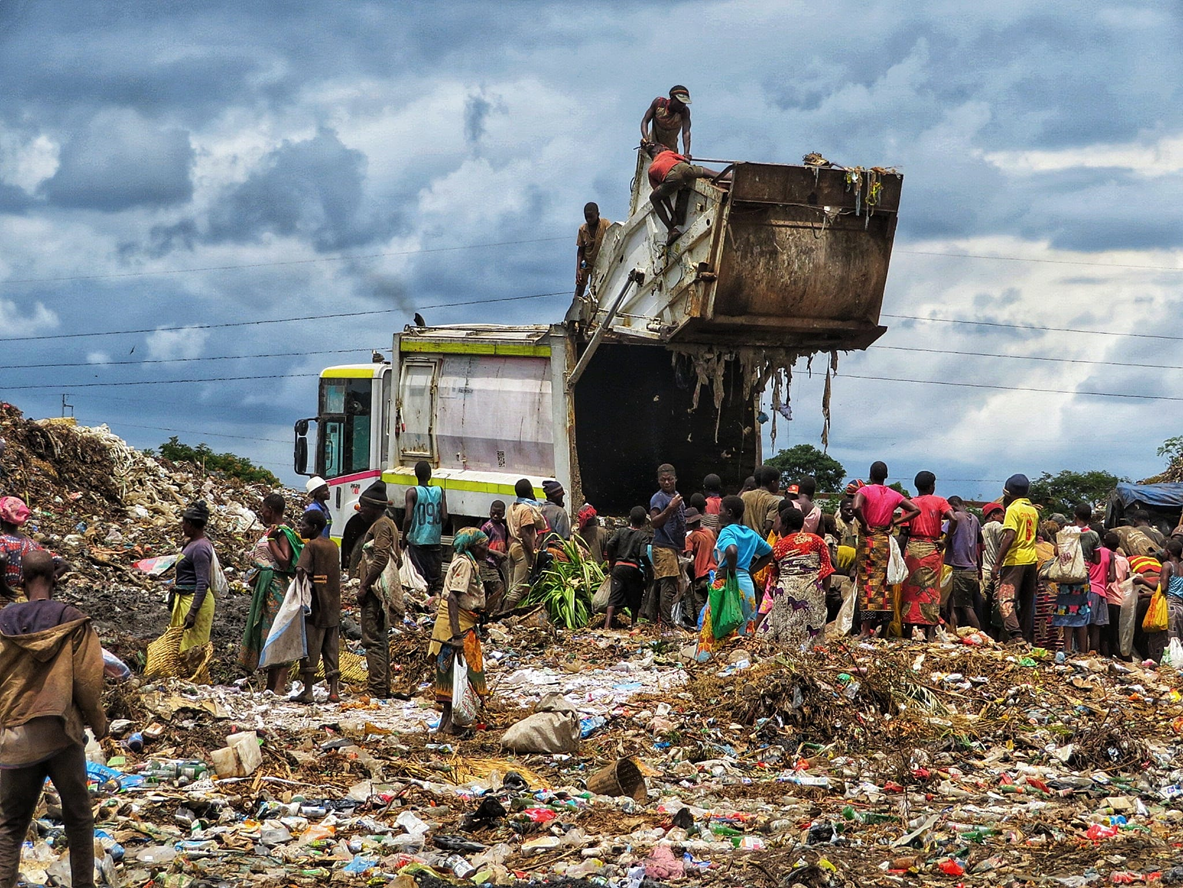
Like many countries in Africa, Ghana faces acute challenges related to plastic waste, e-waste, and end-of-life materials, with only a small fraction of waste being formally collected or recycled. At the same time, these waste streams form the basis for emerging circular economy initiatives that seek to transform discarded materials into valuable resources for infrastructure, energy, and livelihoods through material processing, system design, and technological innovation.
There are opportunities to study circular economy and recycling in Ghana and the wider region from a technical, socio-technical and institutional perspective. Projects are suitable for students with backgrounds in engineering, sustainability/ innovation sciences. This focus area is both for students interested in generating concrete outputs that can really make a difference in the local context, such as system designs, material assessments, robustness of recycled products in relation to the local climate and intended use, process models, logistics of collection and sorting, or decision-support tools. Students who are more interested in social and governance aspects can, for example, focus on how waste valorisation initiatives interact with informal economies, governance structures, environmental justice concerns, and global sustainability agendas.
While opportunities for desk research from Eindhoven exist, this focal area is particularly suited for field-based research, for example in collaboration with Engineers Without Borders Netherlands and local partners in Ghana, such as the Kwame Nkrumah University of Science and Technology (KNUST) and the NGO TrashSmart. Good contacts exist to the Prevent Waste Alliance with its more than 650 members.




Case Studies
-
In cities such as Kumasi, plastic waste creates serious environmental and public health risks, while also offering opportunities for circular innovation. TU Eindhoven research examines initiatives to make the plastic collection logistics more sustainable, and initiatives that convert plastic waste into construction materials for school sanitation facilities, highlighting how technical feasibility, business models, and integration into Ghana’s fragmented waste management system shape long-term viability.
-
TGD research critically assesses whether circular solutions are actually more sustainable than conventional alternatives through environmental and social life-cycle assessment (LCA). Studies comparing plastic bricks with sandcrete blocks, as well as reuse versus recycling of batteries, reveal both potential environmental benefits and important uncertainties around durability, health impacts, and end-of-life pathways in the Ghanaian context.
Opportunities for Students
This thematic area offers rich opportunities for Bachelor end projects, Master’s thesis projects, and internships, often involving fieldwork in Ghana and collaboration with NGOs, municipalities, and local universities. Projects typically combine technical analysis with social, environmental, and institutional perspectives.
Possible research topics include:
Circular economy initiatives for plastic waste and construction materials
Waste-to-infrastructure projects and sanitation in schools
Life-cycle assessment (LCA) and social LCA in Global South contexts
Informal waste economies and governance of recycling systems
Reuse versus recycling of batteries and e-waste
Environmental justice and health impacts of waste management
Several projects build directly on existing collaborations and are supported through calls for theses and funded fieldwork opportunities, enabling students to conduct in-depth empirical research in Ghana.
Ongoing and completed projects at TU Eindhoven
Bachelor end project (2024) Jonna van Dijk – Local Waste Valorization in Kumasi, Ghana
Bachelor end project (2024) Tanno Kambier – Plastic Waste as a Societal Solution?
Bachelor end project (2025) Sil van den Homberg -- Mechanical performance of polymeric bi-materials: Exploring interfacial strength through tensile testing
Bachelor end project (2025) Olivér Mihály -- Geospatial Analysis of Plastic Waste Generation Distribution in Kumasi, Ghana
Master’s thesis (ongoing) Margot Paul – Second-life EV batteries and circular energy storage in Ghana